



Government Banks in India List 2025: Check All PSBs in India, Top 10 Banks, Before and After Merger, Download PDF
Dec 22 2025
As of 2025, there are 12 government banks in India, namely, State Bank of India, Punjab National Bank, Bank of Baroda, Bank of India, Bank of Maharashtra, Union Bank of India, Canara Bank, Central Bank of India, Indian Bank, Indian Overseas Bank, Punjab and Sind Bank, and UCO Bank. Government or public-sector banks are banks where the majority, i.e., more than 50% of the stakes, are held by the government. These banks are a major contributor to the country's economic growth. Indian Government banks are also referred to as public sector banks in India. This PDF is useful for bank exams, which result in boosting the candidate's scores in the examination. The Indian government holds above 50% shares in each PSB. This article provides complete information about the list of government banks in India 2025, their taglines, government shareholdings, and other relevant information. Candidates can start the Banking Awareness Preparation by downloading this in both English and Hindi.
Download the Government Banks in India List 2025 PDF in English
Download the Government Banks in India List 2025 PDF in Hindi
How many Government Banks Are There in India?
There are 12 government banks in India as of 2025, namely, State Bank of India, Punjab National Bank, Bank of Baroda, Bank of India, Bank of Maharashtra, Union Bank of India, Canara Bank, Central Bank of India, Indian Bank, Indian Overseas Bank, Punjab and Sind Bank, and UCO Bank. They are operated by the Indian government and provide essential services like loans, savings accounts, and financial inclusion programs.
Check About Regional Rural Banks in India 2025
Government Banks in India List - Expected Questions PDF
Candidates can check and download the expected questions from the list of public sector banks in India PDF from the link below. With that help, candidates can practice MCQs based on the Government Banks of India.
Check the Expected Questions from Indian Government Banks 2025
List of Public Sector Banks with Headquarters 2025
As of 2025, there are 12 Government banks in India. The 12 public sector banks, along with their taglines, Headquarters, year of establishment, and Government shareholding details, are tabulated below.
Check About Payment Banks of India 2025
List of 12 PSU Banks in India 2025 |
|||||
|
S.No |
Public Sector Banks |
Tagline |
Government |
Established |
Headquarters |
|
1 |
State Bank of India |
Pure Banking, Nothing Else |
57.59% |
1955 |
Mumbai, Maharashtra |
|
2 |
Punjab National Bank |
The Name You Can Bank Upon |
73% |
1894 |
New Delhi, Delhi |
|
3 |
Bank of Baroda |
India's International Bank |
63.97% |
1908 |
Vadodara, Gujarat |
|
4 |
Bank of India |
Relationship Beyond Banking |
73.38% |
1906 |
Mumbai, Maharashtra |
|
5 |
Bank of Maharashtra |
Ek Parivaar, Ek Bank (One Family One Bank) |
79.06% |
1935 |
Pune Maharashtra |
|
6 |
Union Bank of India |
Good People to Bank with |
74.76% |
1919 |
Mumbai, Maharashtra |
|
7 |
Canara Bank |
Together We Can |
62.93% |
1906 |
Bengaluru, Karnataka |
|
8 |
Central Bank of India |
Central to You Since 1911, Build a better life around us |
93.08% |
1911 |
Mumbai, Maharashtra |
|
9 |
Indian Bank |
Your Own Bank: Banking That's Twice As Good |
73.84% |
1907 |
Chennai, Tamil Nadu |
|
10 |
Indian Overseas Bank |
Good People To Grow With |
96.61% |
1937 |
Chennai, Tamil Nadu |
|
11 |
Punjab and Sind Bank |
Where Service is a Way of Life |
98.25% |
1908 |
New Delhi |
|
12 |
UCO Bank |
Honours your Trust |
90.95% |
1943 |
Kolkata, WB |
Note: At the end of the fiscal year 2024 - 25, the total business of Public Sector Banks (PSBs) reached ₹251 lakh crore. Together, these banks operate over 107,000 branches and 120,000 ATMs, along with a substantial network of Business Correspondent outlets.
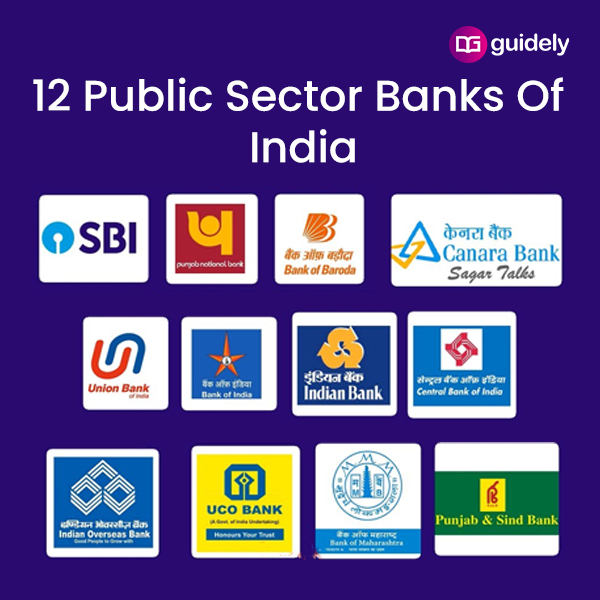
12 Public Sector Banks in India Pictures
Candidates can refer to the 12 Nationalised banks in India, with a pictorial representation provided below for easy reference.
Check the Role and Functions of Banks in India

Indian Government Banks List Before Merger (Public Sector Banks)
With the declaration released on August 30, 2019, 12 public sector banks (government banks in India) are now. Before that, there were 27 public sector banks in India. Check out the list given below.
The Government Banks before the Merger are,
-
Allahabad Bank
-
Andhra Bank
-
Bank of India
-
Bank of Maharashtra
-
Canara Bank
-
Central Bank of India
-
Corporation Bank
-
Dena Bank
-
Indian Bank
-
Indian Overseas Bank
-
Oriental Bank of Commerce
-
Punjab & Sind Bank
-
Punjab National Bank
-
Syndicate Bank
-
UCO Bank
-
Union Bank of India
-
United Bank of India
-
Vijaya Bank
-
IDBI Bank (77.79% government stake)
-
SBI+ and its five associate banks
-
Bharatiya Mahila Bank
Check the List of Indian Banks Headquarters and Taglines
Bank Mergers - Largest Government Banks in India for Bank Exams After Merger
Here is the list of the largest nationalised banks in India in 2025 after the merger. In this merger, the 6 banks merged with 6 independent public sector banks.
-
Six merged banks - SBI, Bank of Baroda, Punjab National Bank, Canara Bank, Union Bank of India, and Indian Bank.
-
Six independent banks - Indian Overseas Bank, Uco Bank, Bank of Maharashtra, Punjab and Sind Bank, Bank of India, and Central Bank of India.
Check the List of Foreign Banks in India
Banks Merged - List of Indian Government Banks After Merger
The bank's mega-merger was announced by Union Finance Minister Nirmala Sitharaman in 2019. Bank mergers are conducted to reduce the operational costs of banks, enhance risk management, and improve professional standards. The bank mergers and acquisitions are provided here.
Check the National Film Awards
List of Government Banks After the Merger |
|
|
State Bank of India, State Bank of Bikaner And Jaipur, State Bank of Hyderabad, State Bank of Mysore, State Bank of Patiala, State Bank of Travancore, Bharatiya Mahila Bank |
1st largest Public Sector Bank |
|
Punjab National Bank, Oriental Bank of Commerce, and United Bank |
2nd largest Public Sector Bank |
|
Bank of Baroda, Dena Bank and Vijaya Bank |
3rd largest Public Sector Bank |
|
Canara Bank and Syndicate Bank |
4th largest Public sector Bank |
|
Union Bank, Andhra Bank, and Corporation Bank |
5th largest Public Sector Bank |
|
Indian Bank and Allahabad Bank |
7th largest Public sector Bank |
Check the Nobel Prize Winners List
Classification of Government Banks
Here are some of the important informations regarding the Classification of Government Banks (PSBs).
-
State Bank of India and its associates: The State Bank of India traces its origin to the Bank of Calcutta, established in 1806, and later renamed the Bank of Bengal. Along with the Banks of Bombay and Madras, it merged in 1921 to form the Imperial Bank of India. In 1955, it was nationalised as SBI. Today, SBI is India’s largest commercial bank with a vast nationwide and global presence. State Bank of India had five associate banks, namely, SBBJ, SBT, SBP, SBM, and SBH, which were merged into SBI in April 2017.
-
Nationalised Banks: Other than SBI, there are 11 Nationalised Banks in India. Punjab National Bank, Bank of Baroda, Bank of India, Bank of Maharashtra, Union Bank of India, Canara Bank, Central Bank of India, Indian Bank, Indian Overseas Bank, Punjab and Sind Bank, and UCO Bank.
-
Regional Rural Banks: Regional Rural Banks (RRBs) were established under the RRBs Act, 1976, to strengthen institutional credit delivery to agriculture and rural areas. Over the past five decades, RRBs have played a key role in expanding financial inclusion and rural banking services. At present, 28 RRBs operate across 28 States and Union Territories, with over 22,000 branches spread across nearly 700 districts in India. A few banks are: Andhra Pradesh Grameena Bank, Arunachal Pradesh Rural Bank, Assam Gramin Bank, etc.
Largest Public Sector Banks After Merger
The largest government banks in India, as of 2025, after mergers, are tabulated below. The State Bank of India is the largest by assets, followed by PNB, Bank of Baroda, Canara Bank, etc. This article also includes a list that is based on the top 10 public sector banks in India by market cap in 2025.
Largest Public Sector Banks After Merger |
|
|
Bank |
Rank |
|
State Bank of India |
1 |
|
Punjab National Bank |
2 |
|
Bank of Baroda |
3 |
|
Canara Bank |
4 |
|
Union Bank |
5 |
|
Bank of India |
6 |
|
Indian Bank |
7 |
|
Central Bank of India |
8 |
|
Indian Overseas Bank |
9 |
|
UCO Bank |
10 |
|
Bank of Maharashtra |
11 |
|
Punjab & Sind Bank |
12 |
Check the Development Banks In India
Top 10 Government Banks In India - Updated List
The bank that the government of India owns is known as the Nationalised Bank. Nationalised banks are also known as public sector banks. From the top 10 nationalised banks in India, Candidates can learn about the top 5 nationalised banks in India.
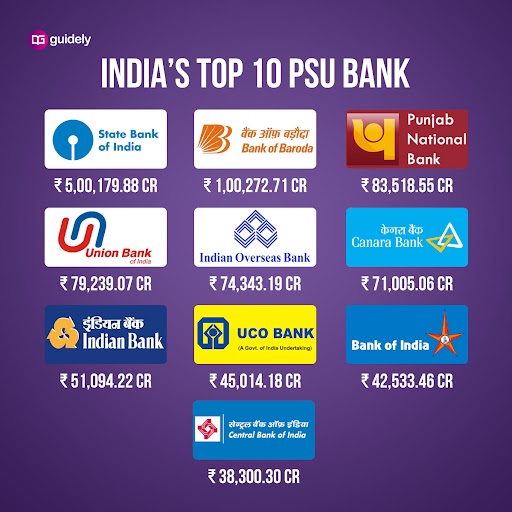
Assets Held By Top 10 Government Banks In India
Here, the top 10 government banks of India are listed based on the assets held by them. The State Bank of India topped the list with a total of ₹ 7170899 crore (INR).
Check the Famous Books for Competitive Exams

Types of Banks
These are the types of banks present in our country. Different sorts of banks have different responsibilities to perform. The public sector banks come under commercial banks.
-
Central Bank
-
Cooperative Banks
-
Commercial Banks
-
Regional Rural Banks (RRB)
-
Local Area Banks (LAB)
-
Specialized Banks
-
Small Finance Banks
-
Payments Banks
Government Banks List - Commercial Banks
There are 3 types of commercial banks: the Public / Government bank, the Private sector bank, the Regional Rural Bank, and the Foreign sector Bank.
-
Commercial banks come under the Banking Companies Act of 1956.
-
They function on a commercial basis, with profit as their primary goal.
-
The primary source of funds for commercial banks is public deposits.
Important Facts for Bank Exams
Here are some of the important facts for bank exams.
-
The Reserve Bank of India (RBI) was the first nationalised bank in India with effect from 1 January 1949.
-
India’s bank nationalisation took place in two key phases: in 1969, the government nationalised 14 major private banks, including PNB and Bank of Baroda, to promote public welfare and rural development; this was followed in 1980 by the nationalisation of six more banks, such as Andhra Bank and Vijaya Bank, further expanding banking access, after the partial nationalisation of the State Bank of India in 1955.
-
The State Bank of India is the largest public sector bank in India by assets.
-
The Indian Government holds the majority, i.e., more than 50% of the stakes of each PSB.
Difference Between Government Banks and Private Banks in India
Candidates can check the few important differences between Government Banks and Private Banks in India, as mentioned in the table below.
| Government Banks and Private Banks in India - Differences | ||
| S. No | Government Banks of India | Private Banks in India |
| 1 | Owned and controlled by the Government of India | Owned by private individuals or corporate entities |
| 2 | Through national-level exams conducted by IBPS, SBI, etc. | Direct recruitment by banks through interviews and assessments. |
| 3 | High job security with stable service conditions | Relatively lower job security, performance-driven |
| 4 | Focus on public welfare, rural banking, and priority sector lending | Emphasis on customer-centric services, innovation, and technology |
Role of Government Banks in the Indian Economy
The major roles that government banks play in the Indian Economy are listed below.
-
Financial inclusion: Jan Dhan–led initiatives and digital reforms have transformed financial inclusion in India. By expanding access to banking services and strengthening social security for vulnerable groups, these measures have empowered millions and promoted a more inclusive society. Financial inclusion schemes ensure the availability of credit, insurance, pension coverage, and economic awareness among the weaker sections. Their impact is wide-ranging, with strong multiplier effects on the economy. The JAM (Jan Dhan–Aadhaar–Mobile) trinity has played a crucial role in integrating the unbanked into the formal financial system.
-
Credit to Agriculture and MSMEs: Public Sector Banks (PSBs) provide the majority of loans for agriculture, accounting for approximately 70-75% of all lending in this sector. According to the Reserve Bank of India’s rules, banks must allocate 18% of their net credit to agriculture. They support farmers through programs like Kisan Credit Cards, interest subsidies, and loans for farm infrastructure. PSBs are also essential for the growth of Micro, Small, and Medium Enterprises (MSMEs). They meet required lending goals, offer collateral-free loans through schemes like PMMY and CGTMSE, and provide working capital, digital services, and advice to help encourage entrepreneurship and job creation.
-
Government schemes implementation: To address rising stress in the banking system, the RBI initiated the Asset Quality Review (AQR) in 2015, leading to transparent recognition of NPAs, which peaked in 2018 and impacted bank finances. In response, the Government launched reforms such as Indradhanush, bank recapitalisation, IBC, EASE, governance reforms, and bank amalgamation under the 4R strategy. These measures significantly improved asset quality, capital adequacy, profitability, and overall resilience of banks, restoring lending capacity and financial stability.
Recruitment Through Government Banks
Recruitment in government banks follows a structured and transparent process to ensure merit-based selection. IBPS conducts PO and Clerk examinations for most public sector banks, while SBI independently recruits its PO and Clerical staff. Specialist Officer recruitment focuses on hiring domain experts in areas such as IT, HR, Law, and Risk Management to strengthen banks’ technical and professional capabilities.
List of Government Banks In India in Hindi
भारत में सरकारी बैंकों के नाम की सूची
यहां हमने आपके संदर्भ के लिए भारत में सरकारी बैंकों की सूची के साथ-साथ भारत में सरकारी बैंकों की सूची पीडीएफ प्रदान की है।
भारत में सरकारी बैंकों की सूची के साथ-साथ विलय के बाद भारत में सरकारी बैंकों की सूची यहां दी गई है। बड़े विलय के बाद ये हैं 12 सार्वजनिक क्षेत्र के बैंक।
भारत में सरकारी बैंकों के नाम
- भारतीय स्टेट बैंक
- पंजाब नेशनल बैंक
- बैंक ऑफ बड़ौदा
- केनरा बैंक
- यूनियन बैंक ऑफ इंडिया
- बैंक ऑफ इंडिया
- इंडियन बैंक
- सेंट्रल बैंक ऑफ इंडिया
- इंडियन ओवरसीज बैंक
- यूको बैंक
- बैंक ऑफ महाराष्ट्र
- पंजाब एंड सिंध बैंक
भारत में 12 सार्वजनिक क्षेत्र के बैंक 2025 - भारत की सभी बैंकों की सूची
यहां हमने भारत में सरकारी बैंकों की सूची का महत्वपूर्ण विवरण पीडीएफ में जोड़ा है। 12 सार्वजनिक क्षेत्र के बैंक अपनी टैगलाइन के साथ।
प्रतियोगी परीक्षाओं की तैयारी करने वाले उम्मीदवारों के संदर्भ के लिए मुख्यालय, स्थापना का वर्ष और सरकारी शेयरधारिता विवरण नीचे सारणीबद्ध हैं।
भारत में सरकारी बैंकों की सूची - भारत में 12 सार्वजनिक क्षेत्र के बैंकों की सूची |
|||||
|
क्र.सं. |
सार्वजनिक क्षेत्र के बैंक |
टैगलाइन |
सरकारी शेयर होल्डिंग (मार्च के अंत तक) |
स्थापित किया गया |
मुख्यालय |
|
1 |
भारतीय स्टेट बैंक |
शुद्ध बैंकिंग, और कुछ नहीं |
57.59% |
1955 |
मुंबई, महाराष्ट्र |
2 |
पंजाब नेशनल बैंक |
वह नाम जिस पर आप भरोसा कर सकते हैं |
73.15% |
1894 |
नई दिल्ली, दिल्ली |
3 |
बैंक ऑफ बड़ौदा |
भारत का अंतर्राष्ट्रीय बैंक |
63.97% |
1908 |
वडोदरा, गुजरात |
|
4 |
बैंक ऑफ इंडिया |
बैंकिंग से परे संबंध |
81.41% |
1906 |
मुंबई, महाराष्ट्र |
5 |
बैंक ऑफ महाराष्ट्र |
एक परिवार, एक बैंक (One Family One Bank) |
90.90% |
1935 |
पुणे, महाराष्ट्र |
|
6 |
यूनियन बैंक ऑफ इंडिया |
बैंक के लिए अच्छे लोग |
83.49% |
1919 |
मुंबई, महाराष्ट्र |
|
7 |
केनरा बैंक |
एक साथ हम कर सकते हैं |
62.93% |
1906 |
बेंगलुरु, कर्नाटक |
8 |
सेंट्रल बैंक ऑफ इंडिया |
आपके लिए केंद्रीय 1911 से, चारों ओर एक बेहतर जीवन का निर्माण करें |
93.08% |
1911 |
मुंबई, महाराष्ट्र |
|
9 |
इंडियन बैंक |
आपका अपना बैंक, बैंकिंग जो दोगुनी अच्छी है |
79.86% |
1907 |
चेन्नई, तमिलनाडु |
|
10 |
इंडियन ओवरसीज बैंक |
अच्छे लोगों के साथ आगे बढ़ना है |
96.38% |
1937 |
चेन्नई, तमिलनाडु |
|
11 |
पंजाब एंड सिंध बैंक |
जहां सेवा जीवन का एक तरीका है |
98.25% |
1908 |
नया दिल्ली |
|
12 |
यूको बैंक |
आपके भरोसे का सम्मान करता हूं |
95.39% |
1943 |
कोलकाता, पश्चिम बंगाल |
भारत के सभी बैंकों की सूची: विलय से पहले भारत में सरकारी बैंक (सार्वजनिक क्षेत्र के बैंक)
30 अगस्त, 2019 को जारी घोषणा के साथ, अब 12 सार्वजनिक क्षेत्र के बैंक (जिन्हें सरकारी बैंक भी कहा जाता है) हैं। इससे पहले, भारत में 27 सार्वजनिक क्षेत्र के बैंक थे। विलय से पहले भारत में सरकारी बैंकों की सूची देखें।
विलय से पहले भारत में सरकारी बैंकों की सूची थी
- इलाहबाद बैंक
- आंध्रा बैंक
- बैंक ऑफ बड़ौदा
- बैंक ऑफ इंडिया
- बैंक ऑफ महाराष्ट्र
- केनरा बैंक
- सेंट्रल बैंक ऑफ इंडिया
- कॉर्पोरेशन बैंक
- देना बैंक
- इंडियन बैंक
- इंडियन ओवरसीज बैंक
- ओरिएंटल बैंक ऑफ कॉमर्स
- पंजाब एंड सिंध बैंक
- पंजाब नेशनल बैंक
- सिंडिकेट बैंक
- यूको बैंक
- यूनियन बैंक ऑफ इंडिया
- यूनाइटेड बैंक ऑफ इंडिया
- विजया बैंक
- आईडीबीआई बैंक (77.79% सरकारी हिस्सेदारी)
- एसबीआई+और उसके पांच सहयोगी बैंक
- भारतीय महिला बैंक
बैंकों का विलय - विलय के बाद भारत में सरकारी बैंकों की सूची
बैंकों का मेगा-विलय 2019 में केंद्रीय वित्त मंत्री निर्मला सीतारमण द्वारा किया गया था। बैंकों के संचालन की लागत को कम करने, बैंकों के जोखिम प्रबंधन में सुधार और पेशेवर मानक में सुधार के लिए बैंक विलय किया जाता है। बैंक विलय और अधिग्रहण यहां प्रदान किए गए हैं।
विलय के बाद भारत में सरकारी बैंकों की सूची |
|
|
पंजाब नेशनल बैंक, ओरिएंटल बैंक ऑफ कॉमर्स और यूनाइटेड बैंक |
दूसरा सबसे बड़ा सार्वजनिक क्षेत्र का बैंक |
|
केनरा बैंक और सिंडिकेट बैंक |
चौथा सबसे बड़ा सार्वजनिक क्षेत्र का बैंक |
|
यूनियन बैंक, आंध्रा बैंक और कॉर्पोरेशन बैंक |
5वां सबसे बड़ा सार्वजनिक क्षेत्र का बैंक |
|
इंडियन बैंक और इलाहाबाद बैंक |
7वां सबसे बड़ा सार्वजनिक क्षेत्र का बैंक |
विलय के बाद सबसे बड़े सार्वजनिक क्षेत्र के बैंक
विलय के बाद भारत के सबसे बड़े सरकारी बैंकों की सूची नीचे दी गई है। इस लेख में भारत के शीर्ष 10 सरकारी बैंकों की पीडीएफ भी शामिल है जो मार्केट कैप के हिसाब से भारत के शीर्ष 10 सरकारी बैंकों पर आधारित है।
विलय के बाद सबसे बड़े सार्वजनिक क्षेत्र के बैंक |
|
|
बैंक |
पद |
|
भारतीय स्टेट बैंक |
1 |
|
बैंक ऑफ बड़ौदा |
2 |
|
पंजाब नेशनल बैंक |
3 |
|
यूनियन बैंक ऑफ इंडिया |
4 |
|
इंडियन ओवरसीज बैंक |
5 |
|
केनरा बैंक |
6 |
|
इंडियन बैंक |
7 |
|
यूको बैंक |
8 |
|
बैंक ऑफ इंडिया |
9 |
|
सेंट्रल बैंक ऑफ इंडिया |
10 |
|
बैंक ऑफ महाराष्ट्र |
11 |
|
पंजाब एंड सिंध बैंक |
12 |
Other Important Links,
Tips to Focus on Exam For this Topic - PSBs in India
For bank exams, give importance to Static GK because it gives sure marks. Practice frequently asked questions to know exam patterns. To remember bank headquarters, use:
-
Simple tricks,
-
Short notes, and
-
Revise regularly.
Public Sector Banks in India - A Summary
Government banks play a crucial role in India’s economic development by promoting financial inclusion, supporting agriculture and MSMEs, and implementing government welfare schemes. As of 2025, there are 12 public sector banks in India where the Government of India holds a majority stake. For banking exams, key facts such as bank names, headquarters, taglines, mergers, and government shareholding are frequently asked under Static GK. Aspirants must memorise these details because such questions are direct, scoring, and often repeated in prelims, mains, and interviews, helping candidates gain an edge and improve overall exam performance.
FAQs
Q: How many government banks are there in India in 2025?
There are 12 government banks (public sector banks) in India as of 2025. Bank mergers are conducted to reduce the operational costs of banks, enhance risk management, and improve professional standards. Currently, the PSBs are 11 + 1 (SBI).
Q: Which are the 12 Public Sector Banks in India in 2025?
The 12 government banks in India are: State Bank of India, Punjab National Bank, Bank of Baroda, Bank of India, Bank of Maharashtra, Union Bank of India, Canara Bank, Central Bank of India, Indian Bank, Indian Overseas Bank, Punjab and Sind Bank, and UCO Bank.
Q: What is the tagline of the State Bank of India (SBI)?
The tagline of the State Bank of India is “Pure Banking, Nothing Else.”
Q: What was the main purpose of the bank mergers announced in 2019?
The 2019 bank mergers aimed to reduce operational costs, enhance risk management, and improve professional standards in India’s public sector banks.
Q: How many public sector banks existed before the 2019 merger?
Before the merger announced in 2019, India had 27 public sector banks. After the consolidation, the number was reduced to 12.
Q: Which is the largest government bank in India after the merger?
After the mergers, the largest public sector bank is the State Bank of India (SBI). It is followed by Punjab National Bank, Bank of Baroda, Canara Bank, Union Bank of India, and Indian Bank.
Q: Why are government banks also called public sector banks?
Government banks are called public sector banks because they are majority-owned and operated by the Government of India, ensuring public ownership and accountability while promoting financial inclusion and economic development.
Q: Are the government banks of India safe for deposits?
Yes, government banks in India are regulated by the Reserve Bank of India (RBI) and are considered very safe for deposits, providing guaranteed security to customers.
Q: What are the Government Banks?
Government or public-sector banks are banks where the majority, i.e., more than 50% of the stakes, are held by the government. They are also referred to as public sector banks in India.
Q: Is SBI a government bank?
Yes, State Bank of India (SBI) is a public sector bank owned by the Government of India, which holds a majority stake of over 57% in the bank.
Q: Are RRBs government banks?
Yes, Regional Rural Banks (RRBs) are government-owned commercial banks operating in India.
General Awareness Smart Analysis (Smart Quiz 2.0)
- Get Weekly 4 set Test
- Each Set consist of 50 Questions
- Compare your progress with Test 1 & 2 & Test 3 & 4
- Deep Analysis in topic wise questions
Super Plan
- All Banking PDF Course 2026, 2025, 2024
- All Banking Video Course
- All Banking Mock Test Series
- All Banking Bundle PDF Courses
- All Banking Ebooks
- All Banking Interview Courses Not Included
Premium PDF Course
- Bundle PDF Course 2025
- Premium PDF Course 2024
- Prime PDF Course 2023